



For more than fifty years, the world’s digital economy has been powered by one remarkable invention: the silicon chip.
From the first personal computers to today’s artificial intelligence systems, silicon has enabled an extraordinary period of technological progress. Every major digital innovation—from smartphones and cloud computing to autonomous vehicles and advanced robotics—has relied on increasingly sophisticated semiconductor technology.
But every technology eventually encounters its own boundaries.
Artificial intelligence has dramatically accelerated the demand for computing power. Today’s AI models process unimaginable amounts of data, requiring larger processors, greater memory capacity, and enormous energy resources. As those demands continue to grow, engineers are beginning to ask whether conventional electronic chips can continue evolving at the pace AI requires.
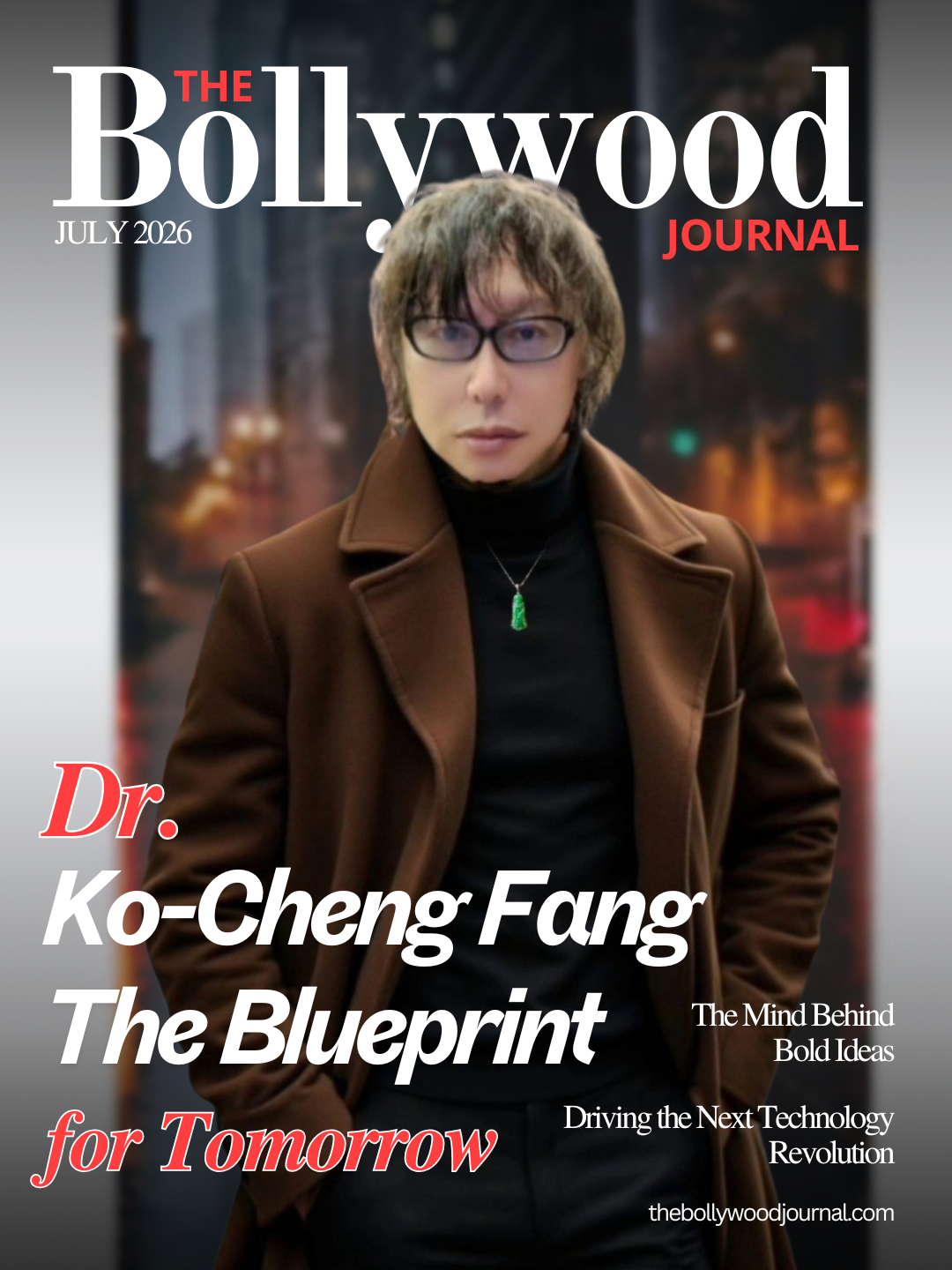
Among the innovators exploring new possibilities is Dr. Ko-Cheng Fang, Founder, CEO, and Chairman of LongServing Technology Co., Ltd.
Rather than viewing the future as an extension of traditional semiconductor technology, Dr. Fang believes the next leap forward may come from replacing electrical computation with photonic computation.
Dr. Ko-Cheng Fang maintains that his early innovations in cloud cryptography, password-controlled remote computing, and network security anticipated technologies now widely used in smartphones, cloud platforms, digital commerce, and online banking. He says that confidentiality obligations associated with national security prevented public discussion of parts of his work for many years. Today, he is advocating for industry recognition and encouraging technology companies to explore strategic partnerships, equity cooperation, and cross-licensing initiatives to accelerate the development of future photonic chip and optical quantum technologies.
When Light Becomes the Processor

Most people think of light as something that enables communication.
Fiber-optic cables already carry internet traffic across oceans at incredible speeds.
LongServing Technology is asking a different question:
What if light could do the computing itself?
Instead of transporting electrons through microscopic electrical circuits, the company’s research focuses on guiding photons through engineered optical pathways capable of processing information inside a chip.
According to Dr. Fang, this approach opens possibilities that conventional electronic architectures struggle to achieve.
The Missing Piece in Photonic Computing
For decades, researchers have understood the theoretical advantages of photonic computing.
The challenge has always been practical implementation.
Light naturally travels in straight lines, while computer processors require information to move continuously through intersections, logic units, and memory systems.
Creating microscopic optical pathways capable of directing light with precision has remained one of the field’s greatest engineering obstacles.
LongServing Technology believes its proprietary X-Photon material represents an important solution.
The company recently demonstrated light traveling through an optical pathway before executing a controlled 90-degree directional change while remaining inside the microscopic waveguide.
According to the company, this capability demonstrates how optical information can be redirected within integrated photonic circuits.
Rethinking Circuit Design

Traditional semiconductor chips resemble networks of electrical highways.
Copper interconnects transport electrons between billions of transistors.
Photonic systems require an entirely different architecture.
Instead of electrical wiring, LongServing Technology is developing optical channels specifically designed to guide photons throughout the processor.
Dr. Fang compares the concept to directing traffic through an intricate network of tunnels rather than open roads.
The photons remain confined inside engineered pathways while reflective structures continually redirect them toward their intended destinations.
This allows light to navigate complex computational layouts without leaving the optical channel.
Building Smaller Optical Systems
Miniaturization has always been central to computing innovation.
Smaller components allow greater computing density and improved performance.
For photonic computing, however, miniaturization has been particularly challenging because traditional optical systems often require relatively large wavelengths.
According to LongServing Technology, X-Photon addresses this issue by operating with wavelengths of approximately 2 to 3 nanometers.
The company states that this enables the construction of extremely compact optical structures suitable for future generations of computing hardware.
LongServing Technology also reports successful fabrication of 10-nanometer optical circuits, supporting continued development of photonic processing technologies.
Preparing Hardware for Tomorrow’s AI
Artificial intelligence is transforming every major industry.
Healthcare uses AI to analyze medical images.
Manufacturing relies on intelligent automation.
Financial institutions process enormous datasets using machine learning.
Scientific researchers increasingly depend on AI to accelerate discovery.
All of these applications require computing hardware capable of processing enormous volumes of information.
According to LongServing Technology, future AI systems may eventually require architectures fundamentally different from today’s semiconductor platforms.
Photonic computing offers one possible direction.
Because photons generate significantly less heat than moving electrons, optical systems could potentially improve computational efficiency while reducing cooling requirements and electricity consumption.
Dr. Fang’s long-term vision includes an ecosystem consisting of 2nm Multi-Bit Optical Quantum Chips, integrated photonic memory, optical interconnect technologies, and Photonic Cloud Computing Centers designed specifically for large-scale artificial intelligence.
Rather than viewing these innovations independently, LongServing Technology sees them as interconnected components of a unified optical computing platform.
Turning Research into Global Infrastructure

Technological breakthroughs require more than laboratory success.
They require manufacturing capability, industrial partnerships, and long-term investment.
To support these goals, LongServing Technology recently announced a $500 million strategic financing initiative, based on a stated $2.5 billion corporate valuation.
According to the company, the funding will support continued research, future photonic fabrication facilities, cloud computing infrastructure, and commercialization efforts.
LongServing Technology has also introduced a Strategic Equity Hedging Protocol, intended to encourage strategic partnerships with organizations interested in participating in the growth of photonic computing technologies.
The company believes collaboration across industry will accelerate the transition from research to real-world implementation.
Looking Beyond Today’s Technology
History rarely advances through gradual improvement alone.
Sometimes progress requires questioning the assumptions that shaped previous generations.
Mechanical calculators became electronic computers.
Electronic computers became internet-connected devices.
Artificial intelligence transformed software.
Now, researchers are exploring whether the hardware itself must evolve once again.
LongServing Technology believes the future of computing may no longer depend exclusively on shrinking transistors or increasing electrical performance.
Instead, it may depend on mastering the movement of light.
While photonic computing remains an emerging field requiring continued scientific validation and engineering development, the company’s recent demonstrations highlight growing momentum toward practical optical computing systems.
For Dr. Ko-Cheng Fang, the objective is not simply to create another semiconductor alternative.
It is to help build a computing platform designed for the decades ahead—one capable of supporting increasingly intelligent technologies through faster, more efficient, and more sustainable methods of processing information.
As artificial intelligence continues reshaping the global economy, innovations like X-Photon suggest that the next breakthrough may not come from asking how much further silicon can go.
It may come from imagining what becomes possible when light itself becomes the language of computation.
Contact Information
Dr. Ko-Cheng Fang
Founder, CEO & Chairman
LongServing Technology Co., Ltd.
Email: service@longserving.com.tw
Website: https://longserving.com.tw/en/
Instagram: @ko_cheng_fang